
 By Admin
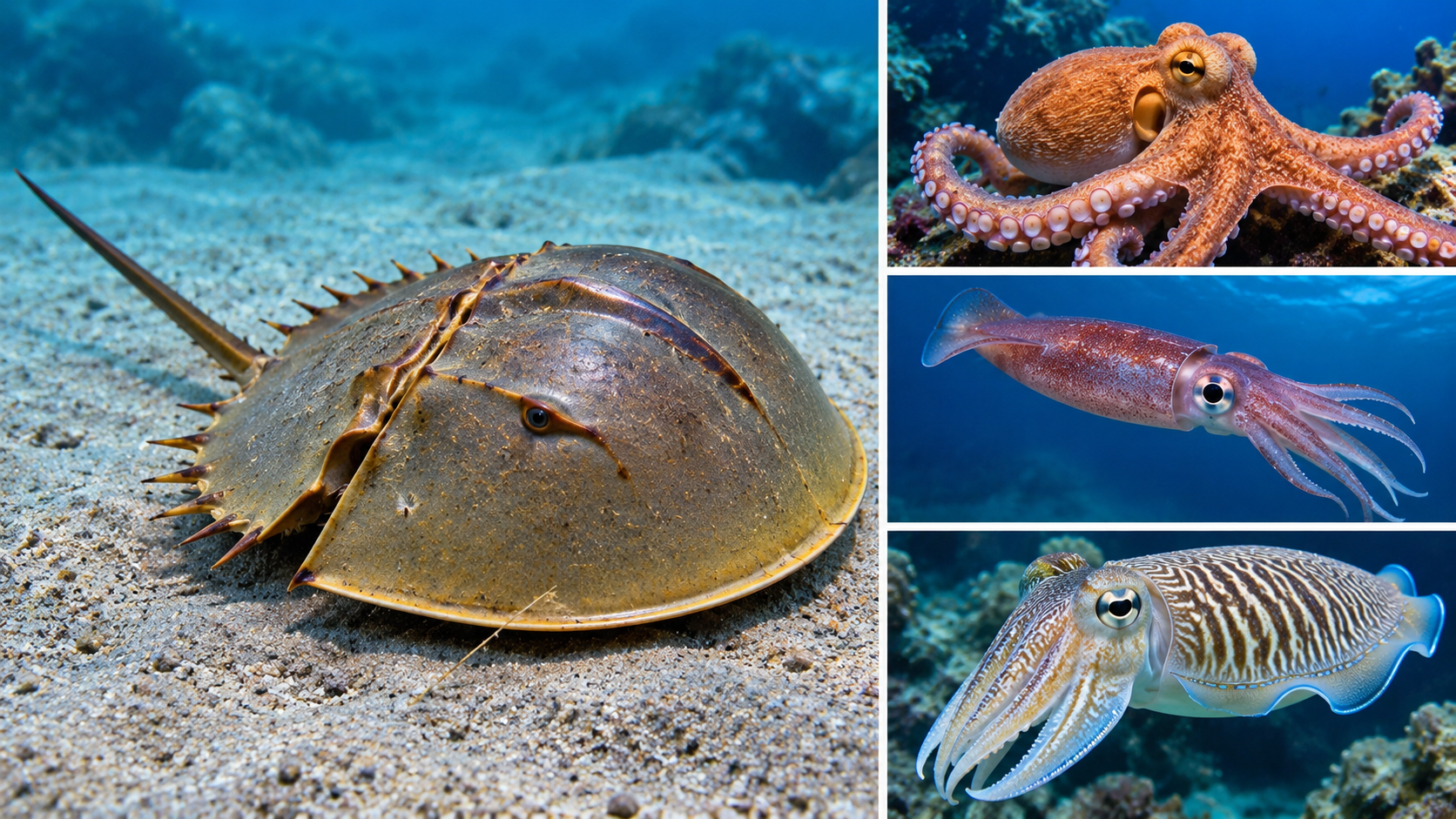
Have you ever wondered which animal has blue blood? While humans and most mammals have red blood, several fascinating animals have blood that turns blue when carrying oxygen. These include horseshoe crabs, octopuses, squid, and certain other marine creatures.
The unusual color comes from a copper-containing protein called hemocyanin. Unlike human hemoglobin, which contains iron, hemocyanin uses copper to transport oxygen throughout the body.
Let’s explore seven amazing blue-blooded animals and discover what makes them special.
1. Horseshoe Crab — The Most Famous Blue-Blooded Animal
The horseshoe crab is one of the best-known animals with blue blood.
These ancient marine arthropods have existed for hundreds of millions of years, long before dinosaurs appeared.
Their blood contains hemocyanin, which turns bright blue when oxygen binds to it.
Interestingly, horseshoe crab blood is also valuable in medical research because its immune cells help detect bacterial endotoxins in medicines and medical devices. nationalzoo.si.edu+1
2. Octopus — An Intelligent Creature With Blue Blood
Octopuses are intelligent marine animals famous for their flexible bodies, problem-solving abilities, and camouflage.
They also have blue blood because they use hemocyanin instead of hemoglobin.
Another fascinating fact is that an octopus has three hearts. Two pump blood through the gills, while the third circulates oxygenated blood throughout the body.
Their copper-based oxygen transport system helps them function in challenging underwater environments. ocean.si.edu
3. Squid — Fast-Swimming Blue-Blooded Animals
Squid are marine mollusks closely related to octopuses.
Like other cephalopods, they use copper-rich hemocyanin to carry oxygen.
Their streamlined bodies and powerful swimming movements allow them to hunt prey and escape predators.
4. Cuttlefish — Masters of Color Change
Cuttlefish are famous for changing their skin color and patterns to communicate or hide from predators.
Despite their remarkable camouflage, their blood is blue because of hemocyanin.
These intelligent marine animals belong to the same broader group as squid and octopuses.
5. Nautilus — An Ancient Ocean Creature
The nautilus is another fascinating marine animal with copper-based blood.
Unlike squid and octopuses, nautiluses possess distinctive external shells.
Their hemocyanin-based circulatory system helps transport oxygen as they move through marine environments.
6. Certain Snails — Small Animals With Blue Blood
Some marine and terrestrial snails also rely on hemocyanin for oxygen transport.
Their circulating fluid, called hemolymph, can appear blue when oxygenated.
This shows that blue blood is not limited to large ocean creatures.
7. Certain Crustaceans — More Animals With Blue Blood
Many crustaceans, including certain crabs, lobsters, and shrimp, use hemocyanin as their oxygen-carrying pigment.
Their hemolymph can appear bluish when oxygenated.
However, the exact appearance varies depending on the species and physiological conditions. smithsonianmag.com
Why Do Some Animals Have Blue Blood?
The main difference between red and blue blood involves oxygen-carrying proteins.
| Feature | Human blood | Blue animal blood |
|---|---|---|
| Oxygen carrier | Hemoglobin | Hemocyanin |
| Main metal | Iron | Copper |
| Oxygenated color | Red | Blue |
| Examples | Humans, dogs | Octopuses, horseshoe crabs |
Hemocyanin becomes blue when bound to oxygen, while oxygenated hemoglobin appears red.
Why Is Horseshoe Crab Blood Important to Medicine?
Horseshoe crab blood contains specialized immune cells used to manufacture Limulus Amebocyte Lysate (LAL).
This substance helps scientists test injectable medicines and medical equipment for dangerous bacterial endotoxins.
However, collecting horseshoe crab blood raises conservation concerns. Scientists and regulators are developing alternative testing technologies that reduce dependence on these animals. Smithsonian Institution+1
What Makes Blue-Blooded Animals Unique?
Blue-blooded animals demonstrate the remarkable diversity of life on Earth.
Their unusual circulatory systems evolved to transport oxygen effectively in different environments.
The answer to animal who has blue blood is not just one species. Horseshoe crabs, octopuses, squid, cuttlefish, nautiluses, and several other invertebrates possess this fascinating biological characteristic.