 By Admin
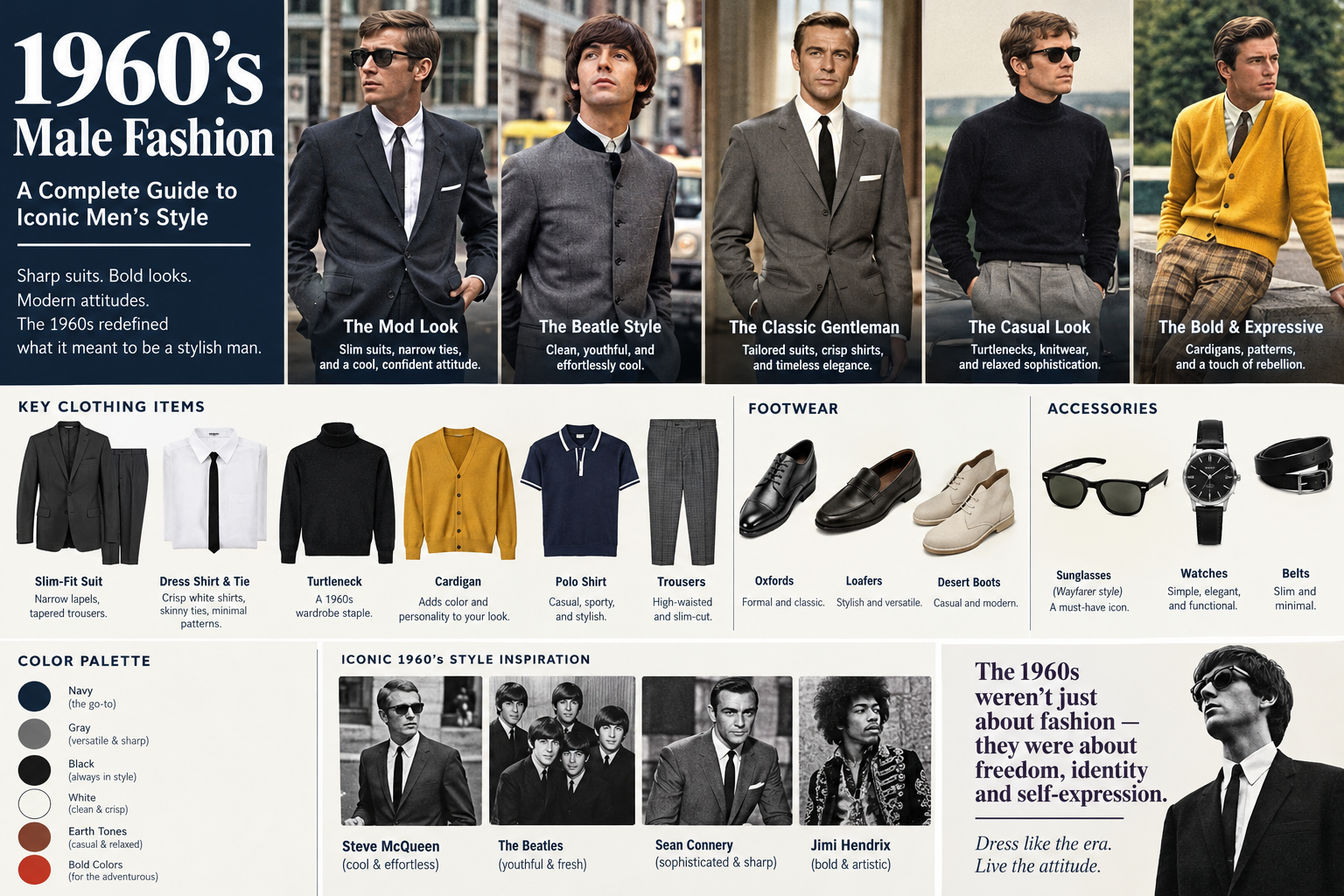
The 1960’s male fashion era was one of the most influential periods in men’s style history. It was a decade when traditional tailoring met youthful rebellion, British sophistication, rock-and-roll culture, and bold experimentation. Men’s clothing began to move beyond conservative suits and simple everyday outfits, making room for slimmer silhouettes, colorful shirts, statement jackets, and distinctive hairstyles.
From the polished appearance of British mod fashion to the relaxed attitude of hippie clothing, the 1960s offered men more ways to express their personalities through what they wore. Some preferred sharp suits, narrow ties, and Chelsea boots, while others embraced denim, leather jackets, patterned shirts, and flared trousers as the decade progressed.
Today, 1960s men’s fashion continues to influence vintage clothing, modern streetwear, formal tailoring, and celebrity-inspired outfits. Whether you are interested in retro menswear, planning a themed event, or simply looking for timeless outfit inspiration, understanding this remarkable decade can help you recreate its most recognizable looks.
What Defined 1960s Male Fashion?
Men’s fashion in the 1960s changed significantly as music, youth culture, film, and social movements influenced everyday clothing. At the beginning of the decade, many men still wore traditional suits, conservative shirts, and neatly pressed trousers. As the years passed, younger generations began experimenting with different cuts, fabrics, colors, and accessories.
One of the biggest changes was the popularity of slimmer tailoring. Jackets became more fitted, trousers often featured narrower legs, and shirts were styled with smaller collars or more distinctive patterns. This created a sharper appearance associated with fashionable young men in London and other major cities.
By the middle of the decade, mod fashion had become a recognizable style. Clean lines, turtlenecks, tailored suits, and polished boots offered a modern alternative to older menswear traditions.
Toward the late 1960s, clothing became more expressive. Paisley prints, velvet jackets, wide collars, denim, and flared trousers gained attention as psychedelic music and counterculture movements influenced fashion.
The result was a decade with several different styles rather than one universal look. A businessman, a young mod, a rock musician, and a hippie could dress very differently while all reflecting the fashion of the same era.
The History of Men’s Fashion in the 1960s
To understand 1960s male fashion, it helps to look at how the decade developed from its early years to its more experimental ending.
Early 1960s: Classic and Conservative Style
At the beginning of the decade, men’s clothing retained many traditional elements from the 1950s. Suits, button-down shirts, knitted sweaters, straight-leg trousers, and leather dress shoes remained important wardrobe staples.
Colors were often relatively restrained, with navy, gray, brown, black, and cream appearing frequently. Men who wanted a fashionable appearance often focused on the quality of their tailoring and the neatness of their outfits.
However, a younger generation was already beginning to challenge these conventions. Slimmer suits, modern hairstyles, and contemporary music helped introduce a more youthful attitude toward menswear.
Mid-1960s: The Rise of Mod Fashion
By the middle of the decade, British mod fashion had become a major influence on men’s clothing. The movement emphasized carefully coordinated outfits, slim tailoring, modern music, and an interest in contemporary design.
Men wore fitted suits, narrow ties, button-down shirts, turtlenecks, and Chelsea boots. Parkas and tailored outerwear offered practical additions to the look.
The mod aesthetic was polished without appearing old-fashioned. Its influence can still be seen in modern slim-fit suits, minimalist footwear, and smart-casual combinations.
Late 1960s: Rebellion and Individual Expression
The late 1960s introduced more freedom in men’s fashion. Counterculture, rock music, psychedelic art, and changing social attitudes encouraged experimentation.
Men increasingly wore colorful shirts, ethnic-inspired patterns, suede jackets, denim, velvet, and flared trousers. Hair also became longer and less formally styled in many youth communities.
This period helped establish the idea that clothing could communicate personal beliefs, musical interests, and cultural identity rather than simply meeting traditional expectations.
The Most Popular 1960s Men’s Fashion Styles
The decade included several distinct aesthetics. Each offers different inspiration for anyone interested in vintage menswear.
1. Mod Fashion
<AsyncImage query=”1960s British mod mens fashion slim tailored suit narrow tie Chelsea boots vintage photography” aspectRatio=”5:4″ width=”100%”/>
Mod fashion is one of the most recognizable men’s styles of the 1960s. Originating in British youth culture, it combined modern tailoring with carefully selected accessories and a clean, confident appearance.
The typical mod wardrobe included slim suits, fitted trousers, crisp shirts, narrow ties, turtlenecks, and Chelsea boots. Some men also wore parkas over their outfits, particularly when riding scooters or spending time outdoors.
Black, white, navy, and gray were common choices, although colorful shirts and subtle patterns added variety.
How to recreate the look: Choose a slim dark suit, a white button-down shirt, a narrow tie, and black Chelsea boots. Keep the outfit neat and avoid excessive accessories.
2. The Classic Ivy League Look
<AsyncImage query=”1960s Ivy League mens fashion vintage college style oxford shirt cardigan chinos loafers” aspectRatio=”5:4″ width=”100%”/>
Ivy League fashion offered a more traditional interpretation of 1960s menswear. Inspired by American university culture, it focused on relaxed tailoring, classic fabrics, and understated sophistication.
Oxford shirts, knitted sweaters, chinos, sport coats, loafers, and button-down collars were central to this style. Plaid and striped patterns also appeared in shirts, jackets, and ties.
Compared with mod fashion, Ivy League dressing often felt more relaxed and less sharply fitted.
How to recreate the look: Wear an Oxford shirt with beige chinos, a navy blazer, and brown loafers. Add a leather belt and a simple watch to complete the outfit.
3. Rock-and-Roll Fashion
<AsyncImage query=”1960s male rock and roll fashion vintage leather jacket black slim trousers Chelsea boots” aspectRatio=”5:4″ width=”100%”/>
Rock music helped make men’s fashion more expressive during the 1960s. Musicians and performers inspired fans to experiment with leather jackets, fitted trousers, boots, distinctive shirts, and carefully styled hair.
Some rock-inspired outfits were relatively minimal, using black clothing and leather footwear. Others incorporated velvet jackets, colorful shirts, scarves, and more theatrical details.
The exact appearance depended on the musician and musical scene. Early rock-inspired looks often retained elements of 1950s rebellious style, while later outfits became more flamboyant.
How to recreate the look: Combine a black leather jacket with a slim shirt, dark trousers, and leather boots. For a late-1960s influence, substitute the plain shirt with a patterned design or add a velvet jacket.
4. Hippie Fashion
<AsyncImage query=”late 1960s hippie mens fashion vintage flared jeans paisley shirt suede fringe jacket round sunglasses” aspectRatio=”5:4″ width=”100%”/>
Hippie fashion reflected the counterculture movements that became prominent during the second half of the decade. It moved away from conventional tailoring and embraced comfort, individuality, and expressive styling.
Men wore denim, loose shirts, embroidered garments, suede jackets, fringe details, beads, and colorful prints. Longer hair and more relaxed grooming often complemented the overall appearance.
Paisley patterns and floral designs became associated with the era’s psychedelic influences. Earthy colors, warm browns, faded blues, and rich reds also helped create a distinctive vintage look.
How to recreate the look: Pair flared jeans with a paisley shirt and suede jacket. Add simple leather accessories or round sunglasses for a recognizable late-1960s appearance.
5. The Beatnik-Inspired Look
<AsyncImage query=”1960s beatnik male fashion black turtleneck slim black trousers minimalist vintage portrait” aspectRatio=”5:4″ width=”100%”/>
Beatnik-inspired clothing offered a minimalist alternative to more colorful styles. Although the Beat Generation emerged earlier, its influence continued into the 1960s through artistic communities, coffeehouse culture, and alternative music scenes.
Black turtlenecks, dark trousers, simple sweaters, berets, and understated shoes were associated with this aesthetic.
The appeal came from simplicity. Rather than relying on elaborate patterns or expensive-looking accessories, the outfit emphasized clean lines and a thoughtful combination of basic garments.
How to recreate the look: Wear a black turtleneck with black or charcoal trousers and simple leather shoes. Keep accessories minimal and choose a streamlined silhouette.
Essential Clothing Pieces in 1960s Men’s Fashion
You do not need an entirely vintage wardrobe to recreate the decade. A few well-chosen pieces can help you build several different outfits.
Slim-Fit Suits
Tailored suits were important throughout the decade, especially for men who preferred polished or mod-inspired dressing.
Slimmer jackets, narrow lapels, fitted shirts, and tapered trousers helped create the modern appearance associated with fashionable young men. Dark navy, charcoal, and black were versatile choices, while lighter shades worked well for daytime outfits.
For a more authentic appearance, choose a suit that fits neatly without being excessively tight.
Turtleneck Sweaters
Turtlenecks became a popular alternative to traditional collared shirts. They worked well under sport coats and blazers and were also worn on their own with tailored trousers.
Black, cream, brown, and navy are useful colors for creating a vintage-inspired outfit.
A fitted turtleneck paired with dark trousers and leather boots offers a simple look influenced by the decade’s modernist and mod aesthetics.
Patterned Shirts
Patterned shirts became especially expressive during the later 1960s. Geometric prints, paisley designs, florals, and colorful stripes helped distinguish counterculture and psychedelic-inspired outfits.
For a subtle interpretation, choose a small repeating pattern and pair it with neutral trousers. For a more dramatic late-1960s look, select a shirt with larger patterns and stronger colors.
Denim Jeans
Denim was a versatile element of casual men’s clothing. Straight-leg jeans worked across different styles, while flared shapes became more recognizable toward the end of the decade.
Dark denim offers a cleaner appearance for mod-inspired outfits. Faded denim and flared cuts work particularly well with hippie and rock-inspired styling.
Leather and Suede Jackets
Leather jackets continued to represent rebellious style, while suede jackets offered a softer texture suited to casual and counterculture outfits.
Brown suede pairs naturally with denim, patterned shirts, and earthy colors. Black leather works well with dark trousers and slim boots.
These jackets remain useful modern wardrobe pieces because they can be worn with both vintage-inspired and contemporary clothing.
Flared Trousers
Flared trousers became increasingly associated with late-1960s fashion. Their wider hems created a different silhouette from the narrower trousers commonly linked to mod style.
They work particularly well with fitted shirts, lightweight knitwear, suede jackets, and boots.
If you want a more understated interpretation, choose trousers with a gentle flare rather than an exaggerated bell-bottom shape.
Popular Colors and Patterns of the 1960s
Color played an important role in the decade’s changing fashion landscape.
Early-1960s menswear often favored navy, gray, brown, cream, and black. These shades worked well with traditional suits, Ivy League clothing, and minimalist outfits.
By the middle and end of the decade, many younger men embraced brighter colors and more expressive combinations.
Popular choices included:
- Mustard yellow: A warm shade that works well with brown, denim, and cream.
- Olive green: A versatile color for jackets, trousers, and casual shirts.
- Burgundy: Adds depth to tailored clothing and knitwear.
- Rust orange: Creates a distinctly retro appearance.
- Psychedelic purple: Suitable for bold, late-1960s-inspired outfits.
- Cream and off-white: Useful for balancing stronger colors.
- Denim blue: A versatile foundation for casual and rock-inspired clothing.
Patterns included paisley, floral prints, geometric designs, stripes, and checks. The best choice depends on the style you want to recreate.
For a mod outfit, prioritize clean lines and restrained patterns. For a hippie-inspired look, experiment with expressive prints and earthy colors.
1960s Men’s Hairstyles and Grooming
Hairstyles were another important part of men’s fashion during the decade. Grooming trends changed alongside music, film, and youth culture.
In the early 1960s, many men preferred neatly combed hair with defined side parts. As mod culture developed, longer fringes and more structured shapes became fashionable among younger men.
Later in the decade, longer hair and less formal styling became increasingly visible in counterculture communities. Sideburns and facial hair also appeared in different forms.
To complement a mod outfit, consider a neatly styled fringe or a classic side-parted haircut. For an Ivy League look, choose a clean, traditional hairstyle. Longer, naturally textured hair works well with hippie-inspired clothing.
You do not need to reproduce a historical haircut exactly. A contemporary hairstyle that complements the outfit can capture the era’s influence without feeling dated.
Shoes and Accessories That Complete the Look
Accessories can make a simple outfit feel more authentic. The key is choosing items that fit the particular 1960s style.
Chelsea boots: Closely associated with British mod fashion, these boots work well with slim trousers and tailored jackets.
Loafers: Ideal for Ivy League-inspired outfits, especially when paired with chinos, sport coats, and Oxford shirts.
Leather dress shoes: A strong choice for formal suits and polished daytime looks.
Round sunglasses: Useful for recreating certain late-1960s counterculture and music-inspired outfits.
Narrow ties: Help create a sharper silhouette with fitted suits and crisp shirts.
Scarves and belts: Add personality while keeping the overall outfit coordinated.
Watches: Simple traditional watches complement classic menswear, while understated designs work well with minimalist styling.
Choose accessories based on the overall outfit rather than mixing every retro detail at once.
How to Wear 1960s Men’s Fashion Today
The easiest way to bring 1960s fashion into a modern wardrobe is to choose one recognizable element and build the outfit around it.
For example, a slim blazer, dark jeans, and Chelsea boots create a subtle mod-inspired look. You can wear this combination for casual gatherings, dinners, or social events.
For an Ivy League influence, combine an Oxford shirt with chinos, a lightweight sweater, and loafers. This outfit works well for smart-casual occasions.
If you prefer the late-1960s aesthetic, try a patterned shirt with straight-leg denim and a suede jacket. Keep the fit modern and avoid adding too many competing colors.
Here are three simple outfit ideas:
Everyday vintage: A white button-down shirt, dark jeans, brown leather belt, and Chelsea boots.
Smart retro: A navy blazer, cream turtleneck, tailored trousers, and leather dress shoes.
Late-1960s casual: A paisley shirt, faded flared jeans, suede jacket, and round sunglasses.
The goal is not to look as though you are wearing a complete historical costume. Instead, use the decade’s distinctive cuts, textures, and colors to create a personal style.
Common Mistakes to Avoid When Recreating 1960s Men’s Style
Although retro menswear offers plenty of opportunities for experimentation, a few mistakes can make an outfit feel less convincing.
Mixing every style together: Mod, Ivy League, rock-and-roll, and hippie fashion have different visual characteristics. Choose one main direction before adding contrasting elements.
Ignoring the decade’s changing timeline: Slim suits and narrow ties are strongly associated with mod styling, while flared trousers and psychedelic patterns are more characteristic of the later 1960s.
Wearing poorly fitting clothing: Vintage-inspired fashion looks best when the proportions are intentional. A tailored jacket should sit comfortably at the shoulders, and trousers should suit the footwear.
Overusing patterns: A patterned shirt can make a strong statement on its own. Balance it with neutral trousers or a simple jacket.
Buying expensive vintage clothing unnecessarily: Modern garments with similar cuts and textures can recreate the aesthetic without requiring a large budget.
Forgetting footwear: Shoes can significantly influence the overall impression. Chelsea boots suit mod outfits, while loafers work naturally with Ivy League styling.
Why 1960s Male Fashion Remains Popular
The lasting appeal of 1960s male fashion comes from its diversity and its influence on contemporary menswear.
The decade introduced or popularized many combinations that remain recognizable today, including slim suits, turtlenecks under blazers, Chelsea boots, patterned shirts, and relaxed collegiate clothing.
Its different subcultures also allow people to explore several interpretations of vintage style. Someone who prefers minimalist clothing can borrow from beatnik and mod aesthetics, while someone who enjoys expressive colors can take inspiration from late-1960s counterculture.
Another reason for its popularity is versatility. Many classic garments from the period work well with modern basics. A turtleneck, tailored blazer, denim jacket, or pair of leather boots can be worn in numerous combinations.
Vintage fashion also encourages individuality. Rather than following one uniform trend, you can select pieces that reflect your interests and personal taste.
Final Thoughts
The 1960’s male fashion era transformed men’s clothing by combining traditional tailoring with youthful experimentation and cultural change. From sharp mod suits and Ivy League basics to leather jackets, patterned shirts, and flared trousers, the decade offered a wide range of styles that continue to inspire modern fashion.
If you want to recreate this timeless aesthetic, begin with a style that suits your personality. Choose tailored clothing for a polished mod look, classic shirts and chinos for an Ivy League appearance, or expressive prints and denim for a late-1960s influence.
Pay attention to fit, color, footwear, and accessories, and do not be afraid to combine vintage-inspired pieces with contemporary basics.
Ultimately, the appeal of 1960s men’s fashion lies in its ability to balance classic style with individual expression. With a few carefully selected garments, you can bring the spirit of this influential decade into your wardrobe while creating a look that feels comfortable, distinctive, and relevant today.