 By Admin
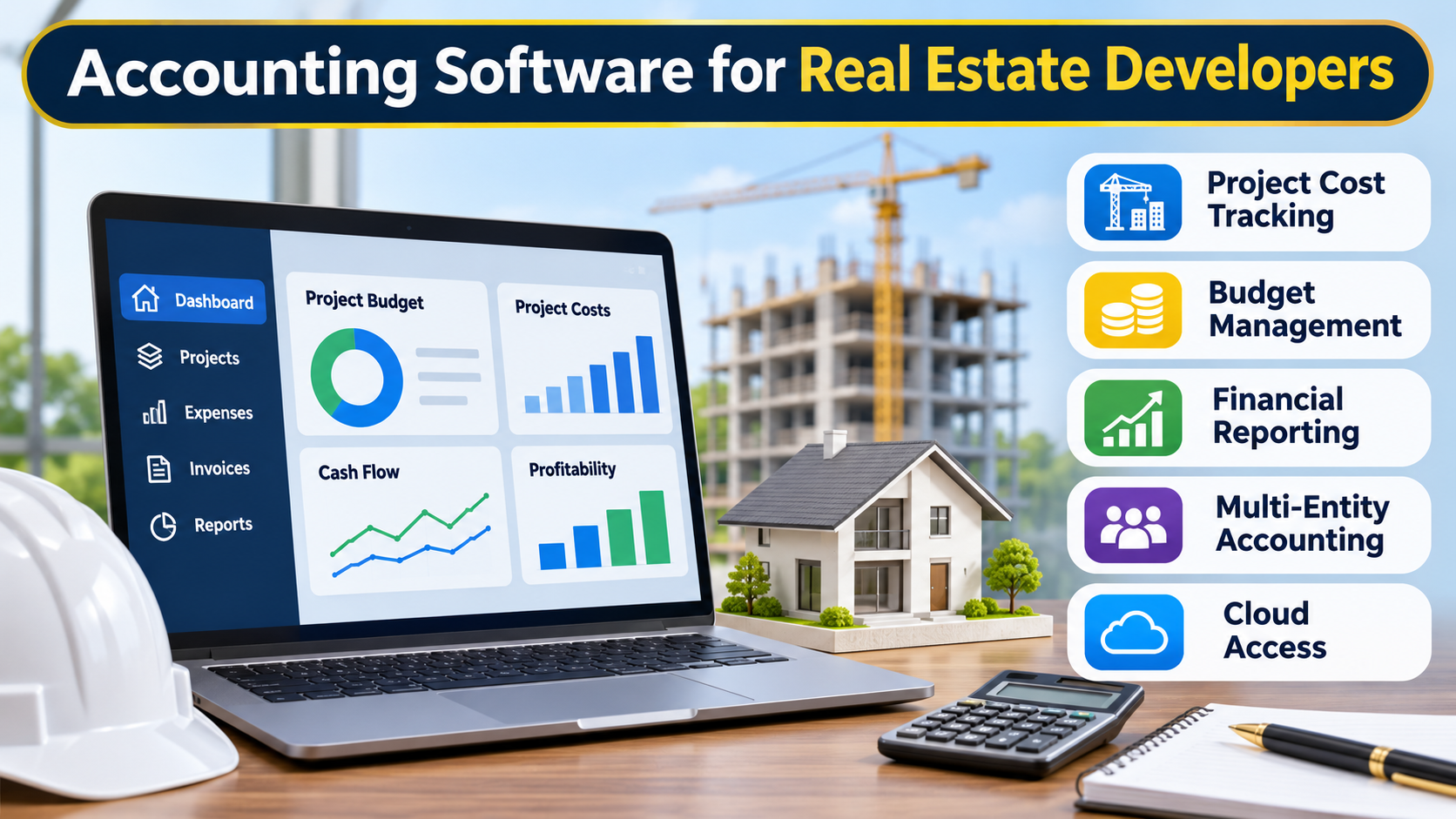
Choosing the right accounting software for real estate developers is essential for managing construction budgets, tracking project expenses, and maintaining accurate financial records. Unlike ordinary businesses, property developers must handle multiple projects, contractor payments, land acquisition costs, and complex financial reporting.
Modern accounting platforms simplify these responsibilities through automation, real-time reporting, and project management integrations.
Here are five accounting software solutions worth considering in 2026.
What Is Accounting Software for Real Estate Developers?
Real estate development accounting software is a financial management system designed to track the costs and revenues associated with property development projects.
These platforms help developers manage construction expenses, monitor cash flow, calculate project profitability, and prepare financial statements.
Advanced solutions also support multi-company accounting, investor reporting, budgeting, and construction loan management.
1. Yardi Voyager – Best for Large Real Estate Developers
Yardi Voyager is a comprehensive real estate management and accounting platform.
It helps developers manage property financials, investment operations, and multiple business entities.
Through Yardi Construction Manager, companies can track development budgets, contracts, construction costs, and project progress.
Its integrated approach makes it particularly suitable for established development firms managing extensive property portfolios.
Best for: Large developers and companies managing multiple properties.
2. Sage Intacct – Best for Financial Reporting
Sage Intacct provides cloud-based accounting and financial management tools for growing real estate businesses.
Its real estate and construction solutions support multi-entity accounting, project cost tracking, financial consolidation, and reporting.
Developers can monitor budgets, review expenses, and generate financial statements across different business entities.
Sage Intacct is particularly useful for organizations requiring detailed financial visibility.
Best for: Medium-sized and growing real estate development companies.
3. MRI Software – Best for Project Cost Management
MRI Software offers financial management solutions designed for real estate businesses.
Its job-costing capabilities help developers monitor construction budgets, contracts, invoices, and project expenditures.
The platform provides budget-versus-actual reporting, helping businesses identify potential cost overruns.
Integration with MRI’s accounting system can also reduce manual data entry.
Best for: Developers requiring detailed cost monitoring and financial controls.
4. Acumatica – Best for Construction Accounting
Acumatica Construction Edition combines accounting, project management, and business operations.
Its features include job costing, accounts payable, budgeting, cash management, and change-order tracking.
Developers can monitor labor, materials, subcontractors, and other construction expenses.
Acumatica also supports multi-company reporting, making it useful for businesses managing several development projects.
Best for: Developers involved directly in construction operations.
5. QuickBooks Online – Best for Small Developers
QuickBooks Online is a popular accounting platform offering invoicing, expense tracking, and financial reporting.
Its Plus and Advanced plans include project profitability features.
Small developers can use these capabilities to organize project income and expenses.
However, complex construction accounting, lender reporting, and multi-entity consolidation may require additional software.
Best for: Small development businesses and straightforward projects.
Key Features to Look for in Real Estate Accounting Software
Before choosing a platform, evaluate these important features:
- Project Cost Tracking: Monitor construction expenses and budgets.
- Financial Reporting: Generate accurate financial statements.
- Multi-Entity Accounting: Manage separate development companies.
- Cash Flow Management: Track incoming and outgoing payments.
- Cloud Accessibility: Access financial information securely.
- Integration Capabilities: Connect accounting with construction management tools.
How Much Does Real Estate Accounting Software Cost?
Pricing varies depending on company size, software features, number of users, and implementation requirements.
Basic accounting platforms generally cost less than specialized real estate enterprise systems.
Advanced solutions often require customized pricing quotes.
Businesses should compare subscription fees, setup expenses, training, and support before making a decision.
Final Thoughts
The best accounting software for real estate developers depends on business size, project complexity, and financial reporting needs.
Yardi Voyager and MRI Software suit established real estate organizations, while Sage Intacct provides advanced financial management.
Acumatica is ideal for construction-focused developers, and QuickBooks Online offers an accessible starting point for smaller businesses.
Choosing the right solution can improve financial accuracy, reduce administrative work, and support successful property development.